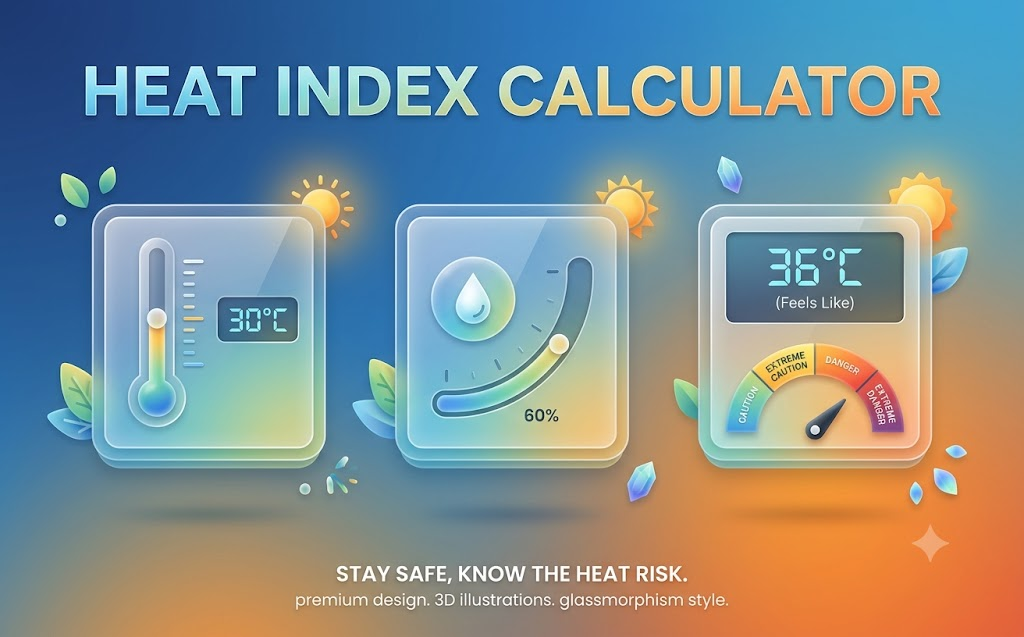
Hot weather can be more dangerous than it appears, especially when high humidity makes the air feel much warmer than the actual temperature. This is where a Heat Index Calculator becomes an essential tool. It combines air temperature and relative humidity to estimate how hot it actually feels to the human body. Understanding this value helps people make informed decisions about outdoor activities and reduce the risk of heat-related illnesses.
Whether you enjoy hiking, work outdoors, exercise regularly, or simply want to stay comfortable during summer, using a Heat Index Calculator can improve your safety. It provides valuable insights that a regular thermometer cannot. This guide explains how the calculator works, why it matters, and how you can use it effectively during hot weather.
What Is a Heat Index Calculator?
A Heat Index Calculator is a weather tool that estimates the apparent temperature by combining the actual air temperature with relative humidity. When humidity levels are high, sweat evaporates more slowly, making it difficult for the body to cool itself naturally. As a result, the air feels much hotter than the measured temperature.
The calculator provides a more realistic understanding of outdoor conditions. For example, if the temperature is 90°F and humidity is 70%, the heat index may exceed 105°F. This higher value represents the stress your body experiences and helps you determine whether outdoor activities are safe.
Why Heat Index Is More Important Than Temperature
Many people rely only on air temperature when planning outdoor activities. However, humidity significantly affects how the body reacts to heat. High humidity reduces sweat evaporation, which is the body’s primary cooling mechanism. Even moderate temperatures can become dangerous when moisture levels are elevated.
A Heat Index Calculator helps reveal these hidden risks. Instead of focusing only on the thermometer reading, it shows the actual heat your body feels. This allows individuals, families, and employers to make smarter decisions during heat waves and humid conditions.
How a Heat Index Calculator Works
The calculator uses two essential inputs: air temperature and relative humidity. These values are entered into a mathematical formula developed through meteorological research. The formula estimates how warm the environment feels to an average person under shaded conditions with light wind.
Modern calculators complete this calculation instantly. Many weather websites, smartphone apps, and digital weather stations include built-in Heat Index Calculator tools. Users simply enter the required information and receive an easy-to-understand apparent temperature within seconds.
Information Needed for Accurate Results
To produce reliable estimates, the Heat Index Calculator requires accurate environmental data. The first input is the current air temperature, usually measured in either Fahrenheit or Celsius. The second is the relative humidity percentage, which indicates how much moisture is present in the air.
Using incorrect values can lead to misleading results. For the best accuracy, obtain temperature and humidity readings from trusted weather stations or digital sensors. Updated local weather information ensures the calculator reflects actual outdoor conditions.
Benefits of Using a Heat Index Calculator
One of the biggest advantages of a Heat Index Calculator is increased personal safety. It alerts users when conditions become dangerous before symptoms of heat stress appear. This early awareness helps prevent dehydration, heat exhaustion, and heat stroke.
The calculator also supports better planning. Athletes can adjust training schedules, construction workers can organize breaks, schools can modify outdoor activities, and families can choose safer times for recreation. These benefits improve both comfort and health during hot weather.
Heat Index Categories Explained
Heat index values are commonly divided into several risk categories. Understanding these ranges allows users to respond appropriately as conditions change throughout the day.
A heat index below 80°F generally presents minimal concern for healthy individuals. Values between 80°F and 90°F require basic caution and hydration. Between 90°F and 103°F, prolonged exposure may lead to fatigue and heat cramps.
Heat index readings from 103°F to 124°F indicate a high risk of heat-related illnesses. Above 125°F, dangerous conditions exist where heat stroke becomes increasingly likely without immediate protective measures.
Who Should Use a Heat Index Calculator?
Almost everyone can benefit from using a Heat Index Calculator during warm months. Outdoor workers often depend on it to schedule safer work periods and reduce heat exposure. Athletes use it to determine whether training sessions should be shortened or postponed.
Parents can use the calculator before allowing children to play outside. Older adults, pregnant women, and individuals with chronic medical conditions should also monitor heat index values because they are generally more vulnerable to excessive heat.
Heat Index and Outdoor Sports
Sports enthusiasts frequently overlook the combined effects of heat and humidity. Running, cycling, soccer, tennis, and other physical activities significantly increase body temperature. When humidity is high, cooling becomes less effective.
Checking a Heat Index Calculator before exercising allows athletes to modify workout intensity, increase hydration, or move activities indoors. Coaches can also use these readings to protect players during practices and competitions.
Heat Index for Workplace Safety
Many occupations require employees to spend hours outside. Construction workers, delivery personnel, landscapers, farmers, and emergency responders face continuous exposure to hot weather.
Employers often use Heat Index Calculator readings to establish work-rest schedules, provide hydration breaks, and implement heat safety policies. Monitoring heat index values reduces workplace accidents and improves employee well-being throughout the summer season.
Common Mistakes When Using a Heat Index Calculator
One common mistake is assuming the heat index applies equally under all conditions. The calculation is designed primarily for shaded areas with light wind. Direct sunlight can make the body feel significantly hotter than the reported heat index.
Another mistake involves ignoring hydration and personal health. Even if the heat index appears moderate, intense physical activity or medical conditions may increase heat-related risks. The calculator should always complement, not replace, personal judgment.
Tips for Staying Safe During High Heat Index Days
Drink water consistently throughout the day instead of waiting until you feel thirsty. Wear lightweight, breathable clothing that allows sweat to evaporate efficiently. Seek shade whenever possible and avoid strenuous outdoor activities during the hottest afternoon hours.
Use sunscreen to protect your skin while reducing additional stress caused by sunburn. Take regular breaks in air-conditioned environments, and never leave children or pets inside parked vehicles. Monitoring the Heat Index Calculator daily adds another valuable layer of protection.
Heat Index Calculator Versus Weather Temperature
Air temperature measures the surrounding atmosphere, while heat index reflects how the human body experiences that environment. The difference becomes especially noticeable on humid summer days.
For example, an air temperature of 95°F may feel closer to 110°F when humidity levels are very high. Without a Heat Index Calculator, people may underestimate the stress placed on their bodies and remain outdoors longer than is safe.
Digital Tools That Include Heat Index Calculations
Today’s technology makes heat index information widely accessible. Most weather applications automatically display heat index alongside current temperature and humidity. Smartwatches, digital weather stations, and online forecasting platforms often provide real-time calculations.
These digital resources update continuously, allowing users to monitor changing conditions throughout the day. Easy access encourages more people to make informed decisions before heading outdoors.
Conclusion
A Heat Index Calculator is more than a simple weather tool. It provides valuable insight into how heat and humidity affect the human body, helping individuals recognize dangerous conditions before they become serious. By understanding apparent temperature rather than relying only on air temperature, people can better protect themselves from heat-related illnesses.
Whether you are working outside, exercising, traveling, or enjoying time with family, checking a Heat Index Calculator should become part of your daily summer routine. Combined with proper hydration, protective clothing, and sensible planning, this simple tool contributes to healthier, safer, and more comfortable experiences during periods of extreme heat.